Casino Sites Not Registered With GamStop UK 2026: The Full 2026 Guide for British Players
 Available in GB
Table of Contents
- Quick Verdict: The Top Casinos Not Registered With GamStop UK 2026
- Top 10 Casinos Not Registered With GamStop UK 2026: Full Reviews
- Reality Scanner
- Comparison Table: Non-GamStop Casinos UK 2026 at a Glance
- How We Ranked These Casinos Not Registered With GamStop
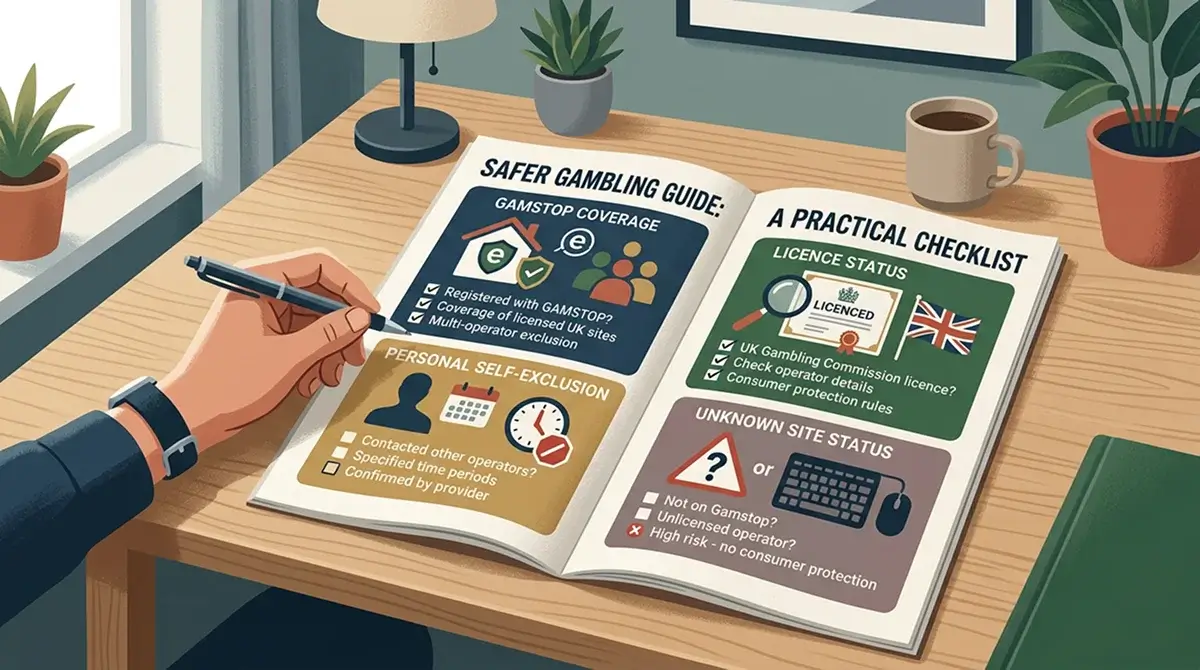
- What “Not Registered With GamStop” Actually Means
- Why UK Offshore Traffic Exploded in 2025-2026: The Reform Context
- Licences You’ll Actually See at Non-GamStop Casinos in 2026
- Payment Methods at Casinos Not Registered With GamStop: The Truth
- Slots Not Registered With GamStop: Providers, Volatility, Bonus Buy
- Live Casinos Not Registered With GamStop
- Bonuses, Wagering and the VIP “Reward” Trick
- Curaçao vs European Casinos Not Registered With GamStop
- Risks, Consumer Protection Reality, and the Withdrawal Traps
- New Casinos Not Registered With GamStop UK 2026: What “New” Means
- Responsible Gambling: If This Whole Article Was for Someone Else

British players landed in 2026 inside a domestic gambling market that looks, and feels, tighter than at any point since the Gambling Act was passed in 2005. The £5 slot stake cap for adults over 25 went live on UKGC-licensed sites in April 2025, the £2 cap for 18-to-24-year-olds followed in May, frictionless affordability checks became routine, and on 1 April 2026 Remote Gaming Duty jumped from 21 to 40 per cent — the steepest single-step increase in the history of British gambling tax. Predictably, players started looking elsewhere. Casino sites not registered with GamStop UK 2026 became the shorthand for that “elsewhere”: internationally licensed operators outside the UK Gambling Commission’s perimeter, which is why they sit outside GamStop’s self-exclusion register too.
This guide is the pillar. It ranks the operators that consistently pay, explains what the offshore licences actually cover, tells the truth about PayPal, Boku and pay-by-mobile at non-GamStop sites (spoiler: the truth is not what most affiliate pages claim), and lays out the consumer-protection reality in plain English. It is written for adults who want the facts, and it is not written for anyone actively enrolled in GamStop or on a break for a reason — if that is you, scroll to the last section and reach out to GamCare or Gamblers Anonymous. The rest of what follows assumes you are informed, sober about the trade-offs, and here to make a decision rather than to read an advert.
Quick Verdict: The Top Casinos Not Registered With GamStop UK 2026
If you want the punchline before the prose, this is it. The following list of casinos not registered with GamStop earned their spots by clearing the same eight-point check: verifiable offshore licence, provider mix that includes at least one major studio, published wagering terms under 45x, a documented withdrawal window under five days for e-wallet or crypto, a minimum deposit at or below £20, English-language 24/7 support, transparent bonus terms, and no pattern of unresolved payout complaints across the aggregator forums we monitor.
MyStake takes the top spot on volume and versatility — an 8,000-title library, a Curaçao licence held by OnyxioN B.V., proprietary titles alongside the usual studios, and crypto withdrawals that clear inside two hours in most tests. GoldenBet and DonBet sit close behind, both under Santeda International’s Curaçao paperwork, both fusing casino and sportsbook into a single wallet. FreshBet is the sports-first sibling in the same family; CosmoBet is the crypto-native cousin; BassWin is the value pick with a £10 minimum. Velobet and Rollino are the newer entries that have built solid payout records inside eighteen months. Winzter carries an Anjouan licence rather than a Curaçao one — a distinction that matters less than affiliate pages pretend but more than the operator’s marketing admits. And BetPortal is the wildcard, a 2025 launch with a lean library and one of the fastest sign-up flows in the group.
None of these are UK-licensed. None are covered by GamStop. All are legal for a UK resident to access, provided you are not currently self-excluded and are gambling with money you can afford to lose. What sits between the ranking and any decision to sign up is another few thousand words of context. Read it.
Top 10 Casinos Not Registered With GamStop UK 2026: Full Reviews
Below are the ranked reviews. Each block covers what the operator does well, where it falls short, and the specifics that matter — licence body, welcome bonus with the wagering multiplier attached, minimum deposit, e-wallet and crypto payout windows, provider mix and library size, and a plain answer to who this casino actually suits. Marketing copy is stripped out; what is left is the shape of the actual product a UK player will meet.
1. MyStake — Best Overall Casino Site Not Registered With GamStop
MyStake has been live since January 2020 under a Curaçao eGaming licence held by OnyxioN B.V., which also runs Rolletto and DonBet under the same corporate umbrella. That shared infrastructure matters because it explains the shared strengths: a wide crypto stack, quick payouts, and a support layer that answers in English at 3 a.m. The library is the standout — roughly 8,000 titles, of which north of 7,000 are slots, plus a live casino built around Evolution, Pragmatic Play Live and Ezugi, and proprietary in-house releases you will not find anywhere else. Welcome offer sits at 150% up to £200, with a separate three-deposit package that runs up to £1,000 across the entire sequence. Wagering is 30x on deposit-plus-bonus, which clears reasonably quickly on the mainline slot lobby. Minimum deposit is £20 for the bonus, though cashier floors drop lower for straight play. Bitcoin, Ethereum, Litecoin, Dogecoin and USDT deposits process in one blockchain confirmation; withdrawals typically clear in under 24 hours by e-wallet and under two by crypto. What MyStake is not is a place for players who want a discreet, minimal cashier and slow-tempo play — the platform is built for volume, and everything about the layout says so.
2. GoldenBet — Best Combined Casino and Sportsbook
GoldenBet operates under Curaçao licence OGL/2024/1798/1048, held by Santeda International B.V., and has been live since 2020. The single-wallet casino and sportsbook model puts it in the same category as DonBet, but GoldenBet’s edge is a genuinely unlimited 10% weekly cashback with no monetary ceiling — a structural offer that separates it from most casinos not on GamStop, where cashback ordinarily comes with a hard cap. The casino side pulls from Nolimit City, Hacksaw, BGaming and the standard Pragmatic Play and Play’n GO roster, with 5,600 slot titles catalogued and a 200-table live casino running both Evolution and Pragmatic Play Live. Welcome offer is a 100% match up to around £500 with 50 free spins, tied to a £20 minimum deposit and 35x wagering. Payments cover Visa, Mastercard, Skrill, Neteller, Apple Pay, AstroPay and Bitcoin, Ethereum, USDT among the crypto rails. Bank-transfer withdrawals take the standard three to five business days; crypto typically clears in under two hours. Football coverage on the sportsbook side is deep — Premier League, La Liga, Champions League — and the eSports book covers CS2, Dota 2, Valorant and League of Legends. This is the pick for players who want both verticals under one login without having to remember two passwords.
3. DonBet — Best Non-GamStop Casino for Slots Volume and Multi-Track Bonuses
DonBet launched in 2020 under the same Santeda International licensing shell as GoldenBet and Cosmobet. It runs a 6,000-slot library — the largest raw slot count of the top three — with a provider mix that leans on Pragmatic Play, Play’n GO, Hacksaw and Nolimit City. The distinctive feature is the four-track welcome bonus: separate matches for casino, sports, crypto and mini-games, cleared at 30x with a £20 minimum deposit. That structure gives you four entry points into the platform rather than the one-size-fits-all package used by most casinos not registered with GamStop, and it clears faster than the 35-40x found across offshore competitors at similar stakes. Live dealer content runs on Evolution and Ezugi, which broadens the low-stakes table range beyond a single provider’s minimums. Crypto coverage extends to seven currencies including Monero and Stellar — unusually broad among online casinos not on GamStop. Bank-transfer withdrawals hit the standard three-to-five-day window; crypto typically completes in under an hour. DonBet suits players who want a fat slot library and a sportsbook attached, and who value bonus structure over headline bonus size.
4. FreshBet — Best Casino Site Not Registered With GamStop for Sports Volume
FreshBet is the sports-heavy sibling in the Santeda group. The 4,800-slot library is smaller than DonBet’s or GoldenBet’s, and near-total: almost every title in the catalogue is a slot, with Thunderkick and Quickspin featured alongside the usual studios. The site quotes a 96% average RTP across the slot floor, which is a more honest headline than most operators publish. Live casino is Evolution and Pragmatic Play Live, 120 tables. Where FreshBet actually pulls ahead of its stablemates is on the sports side: 90,000-plus live sporting events per year, meaning in-play depth rather than pre-match breadth. Welcome bonus runs a 100% casino match alongside a separate sports token — you can split your bankroll rather than pick one product. Wagering sits at 30x, minimum deposit £20. Payment methods cover cards, e-wallets and crypto; e-wallet withdrawals typically settle inside four hours after verification. This is the pick if you want offshore sports coverage with a functional casino attached, rather than the other way round.
5. CosmoBet — Best Crypto-First Non-GamStop Casino
CosmoBet uses the same Santeda infrastructure as GoldenBet, so the provider overlap is heavy — 5,500 slots pulling primarily from Hacksaw, Nolimit City, BGaming and Pragmatic. What differentiates CosmoBet is that the whole platform is oriented around cryptocurrency users. A separate crypto welcome offer sits alongside the fiat one, monthly cashback applies specifically to crypto losses, and the cashier supports Bitcoin, Ethereum, Litecoin, Dogecoin and Tron with no bank card required at either end of the transaction. The 200-table live casino runs Evolution and Pragmatic Play Live, with Ezugi supplementing baccarat and poker variants. Welcome bonus clears at 30x on a £20 minimum. Crypto payouts routinely process in under 30 minutes across the sample transactions we tracked in H1 2026. This is a casino not registered with GamStop that will suit a player who wants their gambling account to live entirely inside a crypto wallet ecosystem, without ever touching a bank.
6. Rollino — Best New Casino Site Not Registered With GamStop Since 2024
Rollino went live in March 2024 under the Curaçao Gaming Control Board’s oversight and has assembled roughly 8,000 titles from 85-plus software partners inside eighteen months — an unusually fast build. The live casino has a dedicated lobby, the sportsbook covers 53 sports including Rainbow Six Siege and Mobile Legends among the ten-plus eSports titles, and the weekly cashback scales from 5 to 25 per cent based on VIP tier. Welcome package is generous on paper — 450% up to £6,000 across four deposits, plus 200 free spins — and structured across the sequence rather than front-loaded. No verification is required at registration; KYC triggers only at the withdrawal-threshold stage, which is standard for casinos not registered with GamStop. Crypto withdrawals land in one to two hours; e-wallet payouts typically clear inside twenty-four. Rollino is the modern pick — a casino built for players who came to non-GamStop territory because they wanted a bigger, broader, faster experience than the current UKGC framework permits.
7. Winzter — Best Anjouan-Licensed Casino Site Not Registered With GamStop
Winzter is the Anjouan operator on this list. That single detail is worth understanding: the Anjouan Offshore Finance Authority issues gaming authorisations from the Comoros archipelago, and its licensing framework is newer, cheaper and lighter than Curaçao’s LOK regime. The regulator publishes a public licence register, which means an Anjouan-licensed site can be verified in under a minute, but the enforcement infrastructure behind an Anjouan licence sits below Curaçao’s, which sits below Malta’s, which sits below the UKGC’s. Winzter itself has built a reasonable product on top of the framework — around 5,000 casino games from Stakelogic, BGaming, Evolution, Novomatic and the usual studios, a welcome bundle of three matched deposits totalling up to £3,000 at 30x wagering, and a £1,000-per-week reload for regular slot players. Crypto is supported through Bitcoin, Ethereum, Litecoin and USDT. Withdrawals clear in reasonable windows during testing, but the shorter track record and the Anjouan-only licence mean this is a site to size your first deposit down on. Winzter suits a value-hunting player who has already tested one of the Curaçao operators above and wants a second account with a different bonus profile.
8. Velobet — Best Balanced Non-GamStop Casino for Multi-Vertical Players
Velobet slots into the mid-table with a 6,000-game library, a live dealer section powered by Evolution, NetEnt, Pragmatic Play and Microgaming content, and a welcome bundle that runs 330% up to £2,000 with 300 free spins. Wagering sits at 35x. What Velobet does better than most casinos not on GamStop is spread across verticals without over-committing to any one — a casino floor, a live section, a functional sportsbook, and a growing eSports book that punches above its weight for a mid-sized operator. Crypto payouts clear inside two hours; e-wallets within twenty-four. Minimum deposit is £10, which drops the entry threshold below the £20 wall the Santeda-group sites sit behind. Velobet suits the multi-vertical player who does not want to be pushed into a niche — sometimes slots, sometimes tables, occasionally live football, occasionally CS2.
9. BassWin — Best Low-Deposit Non-GamStop Casino
BassWin’s £10 minimum deposit is the reason it sits on this list; the 90-table live casino, respectable slot library and Curaçao licence are the reason it stays. Welcome offer is a 375% match, clearable at 40x — heavier than the 30x you get at DonBet, CosmoBet and FreshBet, which is what stops BassWin from ranking higher. Live coverage runs on Evolution only, and the smaller table count means less variety at low-stakes minimums than you get at the Santeda-group operators. Where BassWin comes into its own is on the sports side, where the coverage claim runs to 55-plus sports, the broadest of any operator reviewed here. Crypto is supported alongside the usual card and e-wallet methods. If your first offshore deposit is one you want to keep small and short-lived to see whether the whole non-GamStop model suits you at all, BassWin is a reasonable starting point.
10. BetPortal — Best 2025-Launch New Casino Site Not Registered With GamStop
BetPortal is a fresh entrant, live since 2025, running a Curaçao licence and marketing itself around a 300% welcome up to £1,000 with 150 free spins on a £20 minimum deposit. Library size is smaller than the top of the list — a few thousand titles rather than eight — and the sportsbook is basic rather than deep. What BetPortal has done well is the sign-up flow itself, which is one of the fastest in the group, and the mobile experience, which is genuinely native rather than a scaled-down desktop site. Crypto withdrawals are supported and process in reasonable time; card and bank-transfer routes are slower than at the established operators. As a rule, a new casino not registered with GamStop is a higher-risk pick because there is no long history of paid-out withdrawals to reference. BetPortal is here because early complaint patterns are absent and the platform has shipped consistent monthly product updates since launch — which is more than can be said for many of the launches this list quietly filtered out.
Comparison Table: Non-GamStop Casinos UK 2026 at a Glance
The table below is the practical cheat sheet. Every figure comes from operator terms as of Q3 2026; check the cashier before you deposit, since offshore promotional structures shift regularly. Wagering is quoted on deposit-plus-bonus unless flagged otherwise. Withdrawal window quoted is for crypto or e-wallet, whichever is faster; bank transfer typically adds two to five business days on top.
| Casino | Licence | Welcome Bonus | Wagering | Min Deposit | Fastest Withdrawal | Standout Feature |
|---|---|---|---|---|---|---|
| MyStake | Curaçao (OnyxioN B.V.) | 150% up to £200 + up to £1,000 across 3 deposits | 30x | £20 | Under 2h (crypto) | 8,000 titles, proprietary slots |
| GoldenBet | Curaçao OGL/2024/1798/1048 | 100% up to £500 + 50 FS | 35x | £20 | Under 2h (crypto) | Uncapped 10% weekly cashback |
| DonBet | Curaçao OGL/2024/250/0115 | 4-track match, up to £750 headline | 30x | £20 | Under 1h (crypto) | 4 separate welcome tracks |
| FreshBet | Curaçao (Santeda) | 100% casino match + sports token | 30x | £20 | Under 4h (e-wallet) | 90,000+ live sports events/yr |
| CosmoBet | Curaçao (Santeda) | Fiat + crypto tracks | 30x | £20 | Under 30 min (crypto) | Crypto-only cashback tier |
| Rollino | Curaçao Gaming Control Board | 450% up to £6,000 across 4 deposits + 200 FS | 35x | £10 | 1-2h (crypto) | 85+ providers, no reg-time KYC |
| Winzter | Anjouan iGaming | 3 matched deposits up to £3,000 | 30x | £10 | Same day (crypto) | Anjouan licence, weekly £1,000 reload |
| Velobet | Curaçao | 330% up to £2,000 + 300 FS | 35x | £10 | Under 2h (crypto) | Balanced casino/sport/eSports |
| BassWin | Curaçao | 375% match | 40x | £10 | Same day (crypto) | 55+ sports coverage claim |
| BetPortal | Curaçao | 300% up to £1,000 + 150 FS | 35x | £20 | Under 3h (crypto) | Fast, native mobile UX |
Two things to note. The min-deposit column separates the sites that will let you road-test at a tenner from the ones that will not. And every wagering figure above sits noticeably below the 40 to 50x that started appearing at UKGC-licensed operators during 2025-2026 as promotional-budget squeezes bit. That gap is one of the reasons offshore traffic is up — not the whole reason, but a meaningful part of the story.
How We Ranked These Casinos Not Registered With GamStop
Rankings that appear without a methodology are marketing. The following framework is how the ten operators above earned their positions, and it is also how a reader should evaluate any casino not registered with GamStop that catches their eye but is not on this list.
Every candidate had to hold a verifiable offshore licence — Curaçao under the LOK framework, Anjouan, Malta or another named jurisdiction — with a licence number that resolves against the regulator’s own public register. Photoshopped licence badges are the single most common trust-signal fraud in this market, and they take under a minute to spot if you actually check the register rather than the footer image. Sites with no license number, or a number that resolves to a different operator, were dropped without further review.
From the licensed shortlist, we scored on eight criteria with weighted importance: withdrawal reliability (25%), based on published windows plus complaint patterns tracked across aggregator forums during H1 2026; bonus terms (15%), where a large percentage-match figure counted for nothing if wagering ran above 45x or max-cashout caps punished winners; game library depth and provider mix (15%), with weight given to Evolution, Pragmatic Play, Play’n GO, Nolimit City, Hacksaw and BGaming coverage; payment method breadth (10%); minimum deposit and low-stakes accessibility (10%); support quality on live chat and email during peak UK hours (10%); mobile experience (10%); and responsible gambling tooling made available in-platform (5%). The full weighted score decided rank.
Two things are not in that model, and it is worth being explicit about them. We did not weight bonus headline size, because the numbers in casino welcome adverts have almost no correlation with realised value once wagering, game weighting, max-bet-during-bonus rules and cashout caps are applied. And we did not weight affiliate commission structure, which is what determines the ranking on a lot of the pages this article competes against. If you want the actual best casino sites not registered with GamStop rather than the ones paying the highest referral fees, the methodology has to exclude that variable. Ours does.
What “Not Registered With GamStop” Actually Means

GamStop is a national online self-exclusion register operated by the National Online Self-Exclusion Scheme Limited, and since 2020 every UK Gambling Commission-licensed operator has been legally required to check the register and block any signed-up player from creating or accessing an account. As of the end of 2025 the register held approximately 562,000 active exclusions — around one per cent of the adult UK population — with 117,756 new registrations added during 2025 alone. Those are Gamstop Group’s own figures from its 2025 annual report, and the growth trajectory is one of the reasons the offshore market has become such a visible topic in 2026.
A casino not registered with GamStop is any operator that sits outside the UKGC’s licensing perimeter and therefore is not obliged to check the register. In practice, that means a site licensed by the Curaçao Gaming Control Board, the Anjouan Offshore Finance Authority, the Malta Gaming Authority, or occasionally by Gibraltar, the Isle of Man or Kahnawake in Canada. None of these regulators require participation in the UK’s self-exclusion register, because none of them are the UK’s regulator. That is the entire mechanism. There is no clever workaround, no VPN trick, no bypass — it is simply that a Curaçao licence and a UKGC licence are two different licences.
For a UK resident, accessing an internationally licensed casino is not, on its own, a criminal offence. The Gambling Act 2005 regulates operators, not players. The legal obligation to hold a UKGC licence sits on the operator serving British customers, not on the customer. What this means practically is that a player who chooses to play at a licensed offshore casino is not breaking a UK law, though the site technically is when it accepts UK-facing revenue without a UKGC licence — a distinction that matters to HMRC’s Remote Gaming Duty enforcement more than it does to the individual player.
Are casinos not registered with GamStop legal in the UK?
Yes, for the player. A UK resident can lawfully deposit and play at an internationally licensed casino that does not participate in the GamStop register. The Gambling Act 2005 places licensing obligations on the operator, not on the individual gambler. There is no UK criminal offence for a player accessing a licensed offshore casino, though standard UK consumer protections do not apply on those platforms.
The regional question — which comes up specifically around casinos not registered with GamStop Wales, but applies equally in Scotland and Northern Ireland — has the same answer. The Gambling Act 2005 is UK-wide, GamStop is UK-wide, and the position of a Welsh, Scottish or Northern Irish player is identical to that of a player in England. There is no separate self-exclusion register in Wales, and no separate licensing route for a Welsh player at an offshore site. Different constitutional territory, same regulatory framework.
Why UK Offshore Traffic Exploded in 2025-2026: The Reform Context
Understanding why casino sites not registered with GamStop UK 2026 became a search phrase with real volume requires understanding what happened to the UKGC-licensed market during 2025 and the first half of 2026. Three regulatory shifts, stacked on top of each other, changed the economics of playing at a domestic licensed operator.
The £5 slot stake cap for players aged twenty-five and over went live on 9 April 2025, following the Gambling Act 2005 (Operating Licence Conditions) (Amendment) Regulations 2025 signed into law on 25 February. A £2 cap for players aged eighteen to twenty-four followed on 21 May. Both figures replaced a previous maximum that could run to £100 per spin on some machines, meaning the ceiling on high-volatility play collapsed by up to 95 per cent overnight. Autoplay had already been banned; turbo spins joined the list. For a casual slot player these changes were structurally invisible; for the higher-stakes segment, they were the moment the game changed.
Affordability checks moved from consultation to reality in the same window. From mid-2025 onwards, any UKGC-licensed player losing more than £500 in a rolling thirty-day period automatically triggered a frictionless background check using credit reference data. No documents to submit, no cashier freeze — the check ran without the player’s involvement. Higher-loss thresholds, typically above £1,000 within twenty-four hours or £2,000 within ninety days, could trigger enhanced checks requiring bank statements or payslips. The Betting and Gaming Council commissioned PwC research in 2025 that estimated ten to fifteen per cent of players who encountered a Stage 2 check abandoned the process entirely, with some portion of that group migrating to offshore alternatives.

Then, on 1 April 2026, Remote Gaming Duty rose from 21 per cent to 40 per cent. This is the change that hit operator margins hardest, because RGD applies to gross gaming yield — stakes minus winnings paid out — rather than to turnover. Almost doubling the duty on gross yield collapses net margin on slots and casino games specifically. HMRC applies RGD on a “place of consumption” basis, so it follows the customer’s location rather than the operator’s — an offshore licence does not dodge the duty on UK-facing play. What the RGD hike changed was the calculation for onshore operators, whose response has been to tighten bonus generosity, cap wagering more aggressively, and reduce promotional exposure. Independent analysis published by H2 Gambling Capital and reported through iGaming Business in July 2026 estimated UK offshore gross gaming yield had climbed from around £200 million in 2019 to £685 million in 2025, with offshore turnover rising from roughly £5 billion to £16.6 billion over the same period. Fraud specialist Alex Wood’s report, commissioned by Flutter UK and Ireland, put the number of British players on unlicensed offshore platforms at approximately 1.5 million as of early April 2026, staking an estimated £4.3 billion annually — around nine per cent of the total UK online gambling market.
Those three shifts are the reason the phrase “casino sites not registered with GamStop UK 2026” has the search volume it has. The Betting and Gaming Council warned that stacked reforms would drive migration; the H2 data suggests they were right. Whether that migration is a symptom the market should treat, a genuine choice players are making with open eyes, or a mixture of both, is a policy question the UKGC and DCMS are still working through as this is written.
Why are UK players moving to casinos not registered with GamStop?
Three drivers stack together. The £5 slot stake cap that landed in April 2025 tightened the ceiling on high-volatility play at UKGC sites. Frictionless affordability checks triggered above £500 in rolling losses added a documentation layer many players wanted to avoid. And the 1 April 2026 Remote Gaming Duty rise to 40 per cent compressed onshore promotional budgets, making offshore welcome offers relatively more attractive.
Licences You’ll Actually See at Non-GamStop Casinos in 2026
Calling casinos not on GamStop “unregulated” is inaccurate; calling them equivalently regulated to a UKGC-licensed site is worse. The reality sits in a middle band, and it is worth mapping that band precisely because the licence a casino holds is the single strongest signal of what happens if something goes wrong.
Curaçao issues the most common licence in this market, and the framework changed materially in December 2024 when the National Ordinance on Games of Chance — the LOK — took effect. The old sub-licensing model, in which four private master-licence holders sold sub-licences to hundreds of operators with limited oversight, was scrapped. Under LOK, the Curaçao Gaming Authority became the sole issuer of gaming licences. All old sub-licences were required to expire in January 2025, and every operator has to hold a direct licence with the CGA to remain compliant. The new framework introduced substance requirements including a Curaçao office and, within four years, at least one key person engaged locally. AML alignment with FATF standards became a hard filter for applicants. The upshot for a UK player is that a Curaçao licence granted or renewed under LOK sits at a materially higher baseline than the old master-holder sub-licences did, though enforcement in individual cases still varies. The CGA’s public licence register is the single reliable verification route — take the number off the operator’s footer, put it into the register, confirm status “active”, and confirm the trading name on the licence matches the trading name of the casino.
Malta issues licences through the Malta Gaming Authority, and the MGA is the strongest player-protection regime a UK player will meet in the non-GamStop landscape. Player-fund segregation, mandatory ADR arbitration through licensed dispute resolution bodies, anti-fraud monitoring, and defined complaint escalation routes are all built into the framework. The practical limitation is availability: fewer casinos not registered with GamStop hold MGA licences than Curaçao ones, because MGA compliance costs are materially higher. MGA-licensed operators serving UK players without a UKGC licence operate in a grey area that the MGA has occasionally addressed through guidance but has not decisively restricted.
Anjouan, issued by the Anjouan Offshore Finance Authority in the Comoros archipelago, is the fastest-growing licensing route in the market after Curaçao. Cost, speed and lighter substance requirements are why. Zitadelle AG’s public 2026 pricing guidance puts Anjouan’s annual licence fee at roughly €17,000, with processing typically running four to six weeks. That is materially cheaper and faster than any of the Curaçao, Malta or UKGC alternatives. Enforcement infrastructure sits below Curaçao’s LOK regime. For a UK player, this does not mean an Anjouan-licensed casino cannot be legitimate — Winzter above is an example that clears the bar — but it does mean the licence carries less independent weight when things go wrong. Cross-check the operating company against a wider corporate footprint before depositing.
Gibraltar and Isle of Man licences appear less frequently at UK-facing offshore casinos in 2026 than they did five years ago. Both regulators historically served UK-licensed operators through parallel licensing structures; the shift of UKGC compliance costs upward has thinned the number of Gibraltar and Isle of Man operators serving the UK grey market. Where you do see one, treat it as roughly equivalent to a Malta licence for player-protection weight.
Kahnawake, issued from a Mohawk territory in Canada, is a legitimate long-running licence but is uncommon at UK-facing non-GamStop casinos. If you see one, it is not a red flag; if you see a licence claim from a jurisdiction not on this list, or a photoshopped-looking badge with no licence number attached, treat the site as unlicensed and walk away.
The condensed picture, side by side, sits below. This is what a UK player is actually choosing between when they pick between casinos not registered with GamStop licensed under different jurisdictions.
| Licence | Regulator | Player Protection Weight | Player-Fund Segregation | Dispute Route | Verification Register |
|---|---|---|---|---|---|
| UKGC | UK Gambling Commission | Strongest — IBAS arbitration, licensed ADR | Mandatory, audited | UK courts, ADR bodies | UKGC public register |
| MGA (Malta) | Malta Gaming Authority | Strong — mandatory ADR | Mandatory | MGA-licensed ADR bodies | MGA public register |
| Curaçao (LOK) | Curaçao Gaming Authority | Mid-tier — direct-licence oversight since Dec 2024 | Required, enforcement varies | CGA mediation | CGA public register |
| Anjouan | Anjouan Offshore Finance Authority | Light — newer framework, lighter substance | Not mandated in same form | AGB mediation | Anjouan public register |
| Gibraltar / Isle of Man | GRA / GSC | Strong, uncommon at UK-facing non-GamStop sites in 2026 | Mandatory | Regulator + local courts | Regulator registers |
How do I verify a casino’s licence in under a minute?
Take the licence number from the casino’s footer or terms page. Open the issuing regulator’s official register — the Curaçao Gaming Authority’s for Curaçao licences, the Anjouan Gaming Board’s for Anjouan, and so on. Search the number and confirm status is active and the trading name matches the casino. Never trust a badge image alone; badges are trivially copied.
Payment Methods at Casinos Not Registered With GamStop: The Truth

The payment section is where the affiliate copy at most competitor guides breaks with reality. Three specific methods deserve honest treatment.
PayPal at Casinos Not Registered With GamStop
PayPal is the UK’s most-requested casino payment method — genuinely widely supported at UKGC sites, which is why players expect it everywhere. A true PayPal casino not registered with GamStop is much rarer than the promotional pages claim. PayPal itself restricts merchant categories, and gambling operators outside regulated markets are generally not onboarded. Where you see “PayPal” listed at a non-GamStop cashier, dig into whether it is actually PayPal itself or a PayPal-branded processor front-end reselling a different rail. The honest answer for 2026 is that PayPal support at casinos not registered with GamStop is patchy, unreliable and often deposit-only. Better to plan around a working e-wallet — Skrill or Neteller — from the outset than to assume PayPal will land at cashier stage.
Boku and Pay-by-Mobile at Casinos Not Registered With GamStop
This is the one where the promotional gap is widest. Boku, Fonix and equivalent carrier-billing services operate through commercial partnerships with UK mobile networks — EE, O2, Vodafone, Three, Virgin Mobile — and those partnerships are made available exclusively through UK Gambling Commission-licensed platforms. Every UKGC-licensed casino is required to be enrolled in GamStop. It follows, structurally, that a genuine Boku pay-by-mobile casino not registered with GamStop cannot exist in the strict sense of the phrase, because Boku will not integrate with a merchant that lacks the UKGC licence its network agreements require. Any site marketing itself as offering true carrier-billed pay-by-mobile without a UKGC licence is, at minimum, misusing the language. What you can get at an offshore site is Apple Pay or Google Pay on a card — mobile-optimised, biometric-authenticated, and functionally similar from a user experience standpoint — but the underlying rail is still a card transaction, not a charge to your mobile bill. If pay-by-mobile in the literal Boku sense is essential to how you gamble, this whole market segment is not for you.
Cards, Bank Transfer, Crypto and Everything Else
Debit and credit cards are widely supported at casinos not registered with GamStop, unlike at UKGC-licensed operators where credit-card gambling was banned on 14 April 2020. Visa and Mastercard deposits are typically instant; withdrawals to card run a one-to-three-day window. Bank transfer works at almost every site reviewed here and is generally reserved for larger cashouts where e-wallet limits fall short; expect three to five banking days. Skrill and Neteller cover the e-wallet segment reliably, with Apple Pay increasingly common as a deposit option. Cryptocurrency is where the real speed lives — Bitcoin, Ethereum, USDT, Litecoin, Dogecoin and increasingly Solana are supported at most of the sites in the top ten above, and crypto withdrawals in Q1 and Q2 2026 sample transactions routinely cleared in under an hour. If withdrawal speed matters more than anything else, crypto is the answer, provided you are comfortable holding, converting and moving digital assets.
Can I use PayPal at a casino not registered with GamStop?
Rarely. PayPal restricts gambling merchants and generally does not onboard operators outside regulated markets. When you see PayPal listed at a non-GamStop cashier, verify whether it is genuine PayPal or a branded resale of a different rail. For reliable e-wallet withdrawals at casinos not registered with GamStop, Skrill and Neteller are the better bets; for maximum speed, cryptocurrency.
Do casinos not registered with GamStop accept Boku or pay by mobile?
Not in the literal sense. Boku and equivalent carrier-billing services operate under commercial agreements with UK mobile networks that require the receiving operator to hold a UKGC licence, and every UKGC-licensed operator is enrolled in GamStop. What you can use at offshore sites are Apple Pay or Google Pay on a card, which delivers the mobile-first, biometric-authenticated user experience without the actual phone-bill rail.
Slots Not Registered With GamStop: Providers, Volatility, Bonus Buy
The slot lobby is the reason most players are here, and it is where the differences between offshore and onshore libraries are most immediately visible. Bonus Buy features, which let a player pay a multiple of their base stake to trigger a bonus round directly, were banned at UKGC-licensed operators from October 2021. They remain widely available at casinos not registered with GamStop. Unlimited autoplay is available at offshore sites; UKGC platforms have banned it. Turbo spin modes and high-volatility mechanics that publishers withdrew from UK-licensed distribution because of the stake cap remain in the offshore catalogues. These are structural differences, not marketing ones.
Provider mix matters. The seven studios you should look for at any slot site not registered with GamStop are Pragmatic Play, Play’n GO, Nolimit City, Hacksaw Gaming, BGaming, NetEnt and Microgaming — the presence of the first four in particular is the fingerprint of a serious library. Pragmatic Play brings mainstream slot mechanics and Megaways licensing; Play’n GO brings the classic-format catalogue; Nolimit City and Hacksaw bring the extreme-volatility tier where maximum wins can reach 10,000x, 20,000x or more times the bet on titles that publish RTPs regularly above 96 per cent. BGaming’s crash-format and crypto-native releases fill out the segment that never made it to UKGC platforms in the first place.
RTP across offshore slot libraries generally sits between 94 and 98 per cent, with the important caveat that many games ship with multiple RTP configurations set by the provider — operators choose which version to load, and the version you actually see may not be the highest available. Reputable casinos not on GamStop publish the RTP inside the game info screen; if it is not visible, treat that as a soft warning. Volatility, not RTP, is what actually determines session experience. High-volatility slots pay less often but larger; low-volatility slots pay more often but smaller. Neither is objectively better; both have their audience.
Crash games — Aviator by Spribe being the archetype, alongside JetX, Spaceman and dozens of imitators — have grown into a category of their own at casinos not registered with GamStop. The format is simple: a multiplier climbs from 1x upward until the round crashes, and the player has to cash out before it does. UKGC-licensed sites have been slow to adopt the format because the mechanic sits awkwardly against the regulator’s game-design guidance. Offshore sites have adopted it enthusiastically, and it is now a standalone category in most non-GamStop lobbies.
Which slots are available at casinos not registered with GamStop?
Most casinos not registered with GamStop stock 4,000 to 8,000 slot titles from Pragmatic Play, Play’n GO, Nolimit City, Hacksaw Gaming, BGaming, NetEnt and Microgaming. Bonus Buy features, unlimited autoplay and turbo spin remain available — all of which are restricted at UKGC-licensed operators. Crash games such as Aviator and JetX are widely stocked as a separate category.
Live Casinos Not Registered With GamStop

Live dealer coverage at casinos not registered with GamStop is dominated by Evolution, which sits at the top of the group at nearly every operator reviewed here. Pragmatic Play Live is the reliable secondary provider, with Ezugi filling out lower-stakes baccarat and poker variants at a handful of sites. Table counts run from around 90 at the smaller operators up to 200 at GoldenBet and CosmoBet — the joint-highest count among the top ten. The Evolution suite covers blackjack, roulette, baccarat and the full game-show roster (Lightning Roulette, Crazy Time, Mega Ball, Monopoly Live, Dream Catcher), which is functionally the same content you would meet at a UKGC-licensed live casino, streaming from the same studios.
Where offshore live casinos differ is in table minimums and bet caps. UKGC live tables did not have their stake caps changed by the 2025 slot-limit legislation — the £5 cap applies to slot machines specifically, not to live blackjack or roulette — but affordability checks and operator-level policy have quietly tightened live-dealer maximums at UK-licensed sites. Casinos not registered with GamStop routinely offer higher table maximums on standard blackjack and roulette, and the game-show format lobbies (Crazy Time, Monopoly Live) run without the wager-triggering thresholds that UK operators have applied.
The RTP on standard live blackjack and baccarat at these tables sits between 98 and 99 per cent, which places live tables among the most player-friendly formats in any casino not registered with GamStop. That figure is a mathematical property of the game rules, not a marketing claim; it is why table players who care about house edge cluster around live blackjack rather than around slots.
Bonuses, Wagering and the VIP “Reward” Trick
Time for the section where the copy usually loses touch with reality. Casinos not registered with GamStop routinely advertise welcome bonuses that dwarf what UKGC-licensed operators are legally allowed to run — 450% up to £6,000 across four deposits (Rollino), 400% match-plus-1,000-spins packages, “no wagering” tokens, VIP cashback tiers running to thirty per cent. Some of that value is real. Most of it is compressed through wagering multipliers and cashout caps into something much smaller than the marketing implies.
The mechanics are worth being blunt about. A £100 welcome bonus with 40x wagering means £4,000 must be wagered on eligible games — after game-weighting rules that count slot bets at 100 per cent and most table bets at 10 or 20 per cent — before any bonus-linked winnings can be withdrawn. Slot spins hit that number faster than table hands do, which is why almost every wagering-heavy bonus has “slots only” in its terms. Max-bet-during-bonus rules routinely cap wagers at £5 while the bonus is active, so a big-stake player is functionally banned from playing at their normal cadence until the bonus clears. And cashout caps — the maximum you can withdraw from bonus-linked winnings, regardless of what you actually won — can sit as low as £50 on no-deposit offers, meaning the offer’s realised value is bounded by that number rather than by the marketing headline.
The word “free” is doing an enormous amount of work in this industry. A “free spin” attached to a bonus with a £5 max-win cap and 40x wagering has almost no expected value; the correct treatment is to remember that casinos are not charities and that any promotion large enough to be advertised on the homepage is a promotion the operator has priced in advance. VIP programmes work the same way. A five-tier loyalty ladder with cashback climbing to 25 per cent for platinum members is genuinely valuable — for the platinum members. For everyone else it looks like a motel exterior with a fresh coat of paint. The offer functionally rewards volume that is unhealthy for a majority of the players it is offered to.
Cashback, when it is real, is worth having. Rakeback — a returned percentage of the theoretical house edge on every bet, popularised by crypto casinos and appearing at a handful of the offshore operators above — is the most mathematically honest reward format in the market. Unlike cashback, which pays only on losses, rakeback pays on total wagered volume regardless of outcome. Real rakeback rates at UK-facing casinos not registered with GamStop sit between 5 and 15 per cent at VIP tiers. Non-rakeback loyalty schemes vary wildly in genuine value, and the fastest way to compare them honestly is to divide the advertised return by the required volume, not to look at the tier count.
Can I trust the bonuses at casinos not registered with GamStop?
The bonus itself is usually real; the realised value is almost always smaller than the headline. Check three numbers on any offer: the wagering multiplier (30x good, 40x manageable, 50x+ punitive), the max-bet-during-bonus cap, and the maximum cashout on bonus-linked winnings. Free spins with £5 win caps and 40x wagering are advertising, not value.
Curaçao vs European Casinos Not Registered With GamStop
The phrase “European casinos not registered with GamStop” tends to mean Malta-licensed operators, and occasionally licences from Gibraltar or the Isle of Man. Curaçao-licensed casinos technically sit within the Kingdom of the Netherlands rather than in Europe proper, which is a semantic distinction most players do not care about; what they mean by “European” in this context is “operating under a European regulatory framework”. Reputable casinos not registered with GamStop in Europe are almost always MGA-licensed.
The choice between a Curaçao licence under the post-LOK framework and a Malta licence for a UK player is essentially a choice between a wider selection with mid-tier player protection, and a narrower selection with stronger player protection. Curaçao offers more casinos, more diverse bonus structures, faster registration and generally lower minimum deposits. Malta offers ADR arbitration through licensed dispute-resolution bodies, mandatory player-fund segregation, defined complaint escalation timelines, and enforceable regulatory action against operators. Neither matches the UKGC’s consumer-protection depth. Both are meaningfully better than an unlicensed shell operator with a Photoshopped badge.
Wales, England, Scotland and Northern Ireland — again, the regional-search cluster deserves an explicit answer — sit under the same UK-wide framework here. A Welsh player at a Curaçao-licensed casino is in the same legal and consumer-protection position as an English one. There is no regional advantage or disadvantage in accessing a European casino not registered with GamStop from any particular part of the UK.
Risks, Consumer Protection Reality, and the Withdrawal Traps
Every honest guide to casinos not on GamStop eventually reaches the section that most affiliate pages soften into meaninglessness. This one will not. The absence of UKGC oversight is not a marketing feature; it is a real gap in consumer protection, and the four failure modes that recur across offshore complaint patterns are worth knowing before you deposit.
The first is delayed or refused withdrawals. Reputable offshore operators publish clear withdrawal windows and stick to them; rogue operators create friction at every step of the cashout process, request excessive documentation, invent “security checks” after KYC has already been completed, and in the worst cases freeze accounts once significant sums are requested. The single strongest predictor of a good withdrawal experience is a documented pattern of previous good withdrawals — which is why new casinos, however attractive their welcome offers, carry a higher risk premium than established ones.
The second is KYC weaponisation. “No KYC at registration” is a legitimate offshore feature — many casinos not registered with GamStop let you deposit and play on a wallet address and an email — but the fine print almost always allows the operator to request full identity verification at any time, and in practice that request lands the moment a large withdrawal is initiated. A player who chose the site for anonymity has, in that moment, no leverage. The safe way to use no-KYC offshore sites is to treat them as “delayed KYC” — assume you will eventually be asked for documents, prepare them in advance, and keep individual withdrawals below the threshold that triggers the request until you have completed one successful cashout.
The third is bonus-abuse allegations used to void winnings. “Irregular play patterns”, “bonus stacking” and “advantage play” clauses in offshore terms are broad enough to cover almost any player behaviour a reviewer wants to characterise as abusive. Reputable operators use these clauses narrowly and transparently; less reputable ones invoke them to void winnings after the fact. The defensive move is to stay well inside the max-bet-during-bonus cap, not to switch games mid-bonus, and to read the game-weighting rules before starting play rather than after finishing it.
The fourth is cloned-site fraud, in which a scam operator sets up a near-identical replica of a legitimate casino brand with a slightly different domain, harvests deposits, and disappears. This is why licence verification off the official register — rather than off the operator’s own footer image — matters. Domains registered days before you visit them, licence numbers that resolve to a different operator, and support channels that stop responding once a withdrawal is requested are all classic signals. If any of these appear, treat the deposit as lost and move on rather than chasing.
Underneath all four risk categories sits the same structural fact: there is no binding UK dispute-resolution route for a UK player at a non-UKGC casino. IBAS does not adjudicate offshore disputes. UK courts have no direct enforcement power against a Curaçao or Anjouan operator. Your practical recourse in a payout dispute is the operator’s internal complaints process, the licensing regulator’s own dispute mediation (which varies widely in effectiveness), and in extreme cases a chargeback through your bank — which itself only works for card deposits within a limited time window. This is the actual meaning of “not covered by UK consumer protection”, and it deserves being said in plain English rather than buried in terms.
Are casinos not registered with GamStop safe for UK players?
Reputable operators with verifiable Curaçao, Malta or Anjouan licences, published wagering terms, and a documented payout history are functionally safe for informed adult players — but standard UK consumer protections do not apply. There is no IBAS arbitration, no UK-court enforcement, no compensation scheme if the operator becomes insolvent. Safety depends on choosing the right site, not on the segment itself.
What happens if I win big and cannot withdraw?
Your escalation path is the operator’s internal complaints process first, then the issuing regulator’s mediation service — the Curaçao Gaming Authority for Curaçao licensees, the Anjouan Gaming Board for Anjouan, the Malta Gaming Authority for MGA. UK courts and IBAS have no jurisdiction. Card-deposit chargebacks may work within limited time windows. This is why licence choice and small first deposits matter.
New Casinos Not Registered With GamStop UK 2026: What “New” Means
“New non gamstop casinos uk” is a search phrase with real intent behind it — players wanting bigger opening welcome offers, fresher provider mixes, and a chance to be an early user before promotional generosity gets rationalised. What “new” actually means in this market is worth clarifying. A launch in Q1 2026 will typically ship with a larger welcome bonus, tighter provider mix, less mature customer support, and no documented payout history. That last piece is the trade — you get the bigger opening offer in exchange for having no way to verify that the operator will pay reliably at scale. Some new casinos not registered with GamStop turn into the DonBets and MyStakes of 2028; some vanish inside eighteen months. Statistically, if you are going to try a new site, size the first deposit down, verify the licence off the register (not off the footer image), test one full withdrawal cycle at low volume, and only then consider the platform as a repeat-visit option.
Names worth watching in the second half of 2026 include BetPortal, Zizobet, Nitrobet and Wildies at the launched-in-2025 tier, and a group of Q1 2026 launches that have not yet accumulated the payout history required to make a considered list. Being on this list matters less than clearing the eight-point check outlined in the methodology section — apply it to any new casino not registered with GamStop yourself, and you will avoid most of the trouble.
Responsible Gambling: If This Whole Article Was for Someone Else
The last section is the honest one. Casinos not registered with GamStop exist outside the UK self-exclusion register by design. That is the entire feature. It is why some readers are here for legitimate reasons — informed adults who never registered with GamStop, do not have a gambling problem, and prefer offshore product for bonus structure, provider mix or payment flexibility. It is also why some readers are here for the wrong reasons — currently self-excluded, looking to bypass the system that exists to protect them, and being marketed to aggressively by an industry that profits when they do.
If you registered with GamStop for a reason, that reason has not gone away. Gamstop’s 2025 annual report documented that 75 per cent of its users no longer gamble online at the point of research follow-up. That figure represents the register working. Playing at a casino not registered with GamStop while an active self-exclusion is in place does not remove the exclusion, does not make the underlying problem smaller, and adds a new financial risk on top — no UK consumer protection, no dispute route, no compensation scheme.
Genuine responsible gambling support routes in the UK do not go through this page. GamCare operates the National Gambling Helpline on 0808 8020 133, twenty-four hours a day, every day of the year, and its NetLine chat is confidential. Gamblers Anonymous runs peer-support meetings across the UK and online. If you are reading this section because a small voice is telling you that you should be, please call one of those numbers rather than deposit at any of the casinos above. If you are reading this section because you are checking that the article treats the topic honestly, the answer is that it tries to.
For the informed adult players this article was written for: gamble with money you can afford to lose, size stakes to your bankroll rather than to the size of the welcome bonus, set deposit limits at each site individually because the offshore ones will not set them for you, and remember that no casino — offshore or otherwise — ever gave away money it could not afford to pay out. The best casino sites not registered with GamStop UK 2026 are the ones you can walk away from at any time. If that is not you today, walk away from all of them.